Abstract
With the rising popularity of 3D Gaussian splatting and the expanse of applications from rendering to 3D reconstruction, the need for geometry processing methods tailored directly to this representation becomes increasingly apparent. While existing approaches convert the centers of Gaussians to a point cloud or mesh to use them in existing algorithms, this conversion might discard valuable information present in the Gaussian parameters or introduce unnecessary computational overhead. Additionally, Gaussian splatting tends to contain a large number of outliers that, while not affecting the rendering quality, need to be handled correctly to not produce noisy results in geometry processing applications. In this work, we present a novel framework that operates directly on Gaussian splatting representations for geometry processing tasks. Our work introduces a graph-based outlier removal designed for Gaussian distributions as well as a formulation to compute the Laplace-Beltrami operator, a widely used tool in geometry processing, directly on Gaussian splatting. Both use the Mahalanobis distance to account for the anisotropic nature of Gaussians. Our experiments show superior performance to the point cloud Laplacian operator and competitive performance to the traditional Laplacian operator computed on a mesh, while avoiding the need for intermediate representation conversion.
Mahalanobis Neighborhood
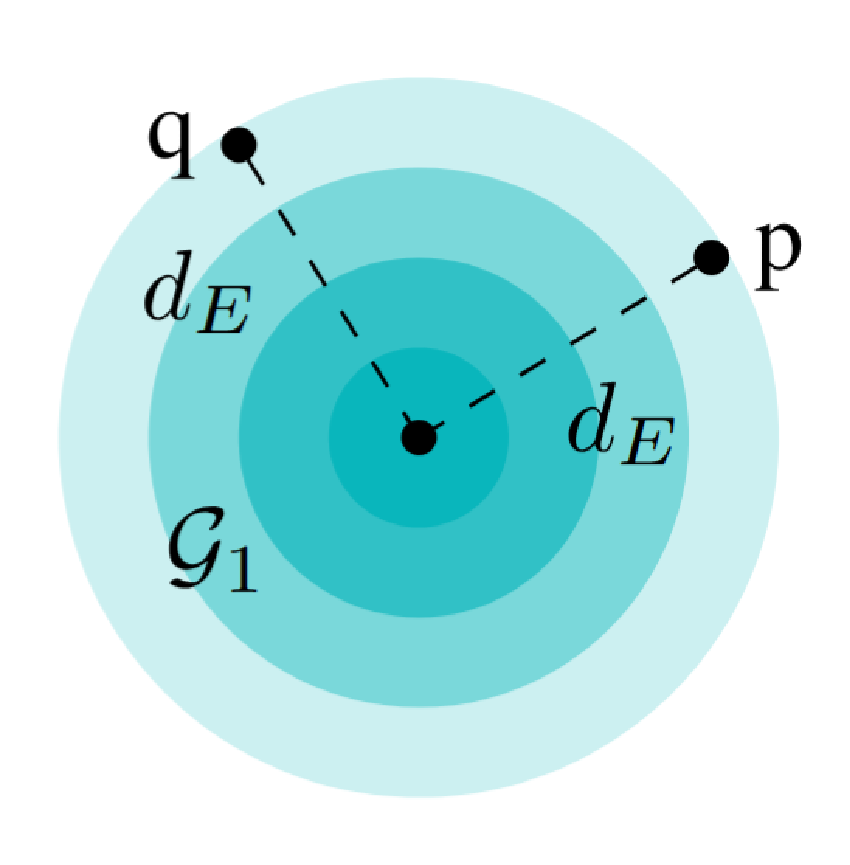
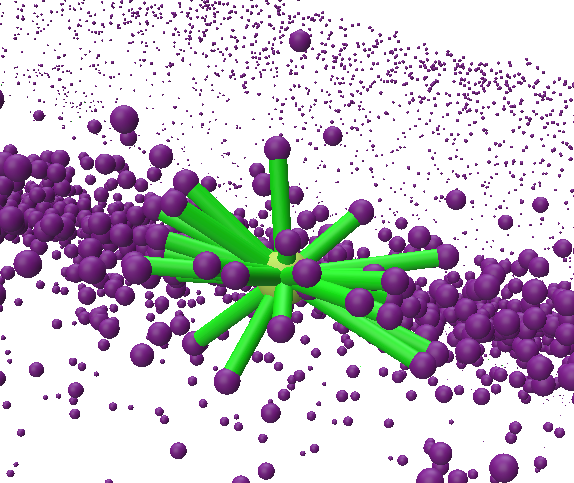
Euclidean Distance
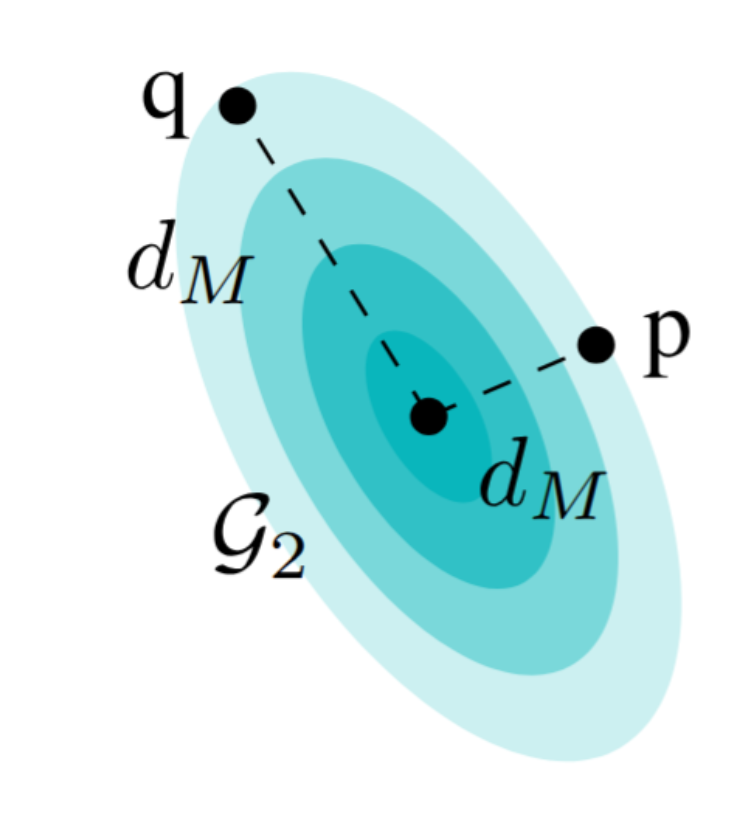
Mahalanobis Distance
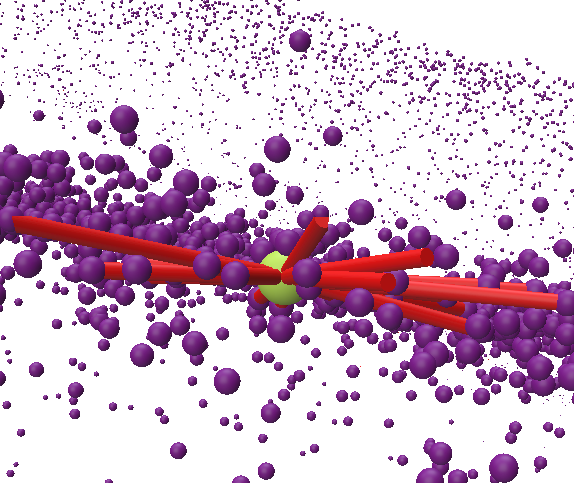
Difference between the Euclidean distance (left) and Mahalanobis distance (right). p and q both have the same distance. The Euclidean distance is a special case of the Mahalanobis distance if the covariance is equal in all directions while the general Mahalanobis distance weights directions differently based on the directional variance. We take the Gaussian Splattings from PGSR without any further pruning. We visualize the center of the Gaussians and we zoom in to observe close to the surface. The Mahalanobis neighborhood captures the surface structure better than the Euclidean neighborhood.
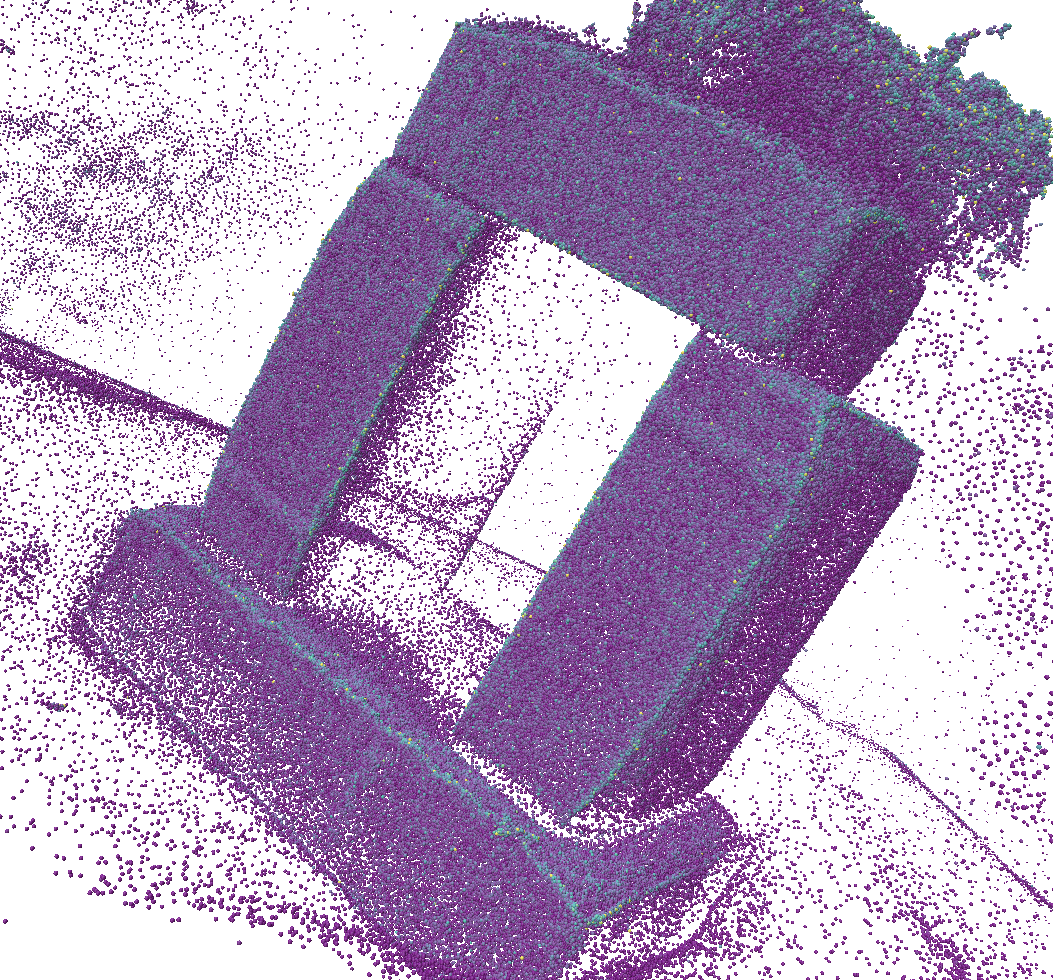
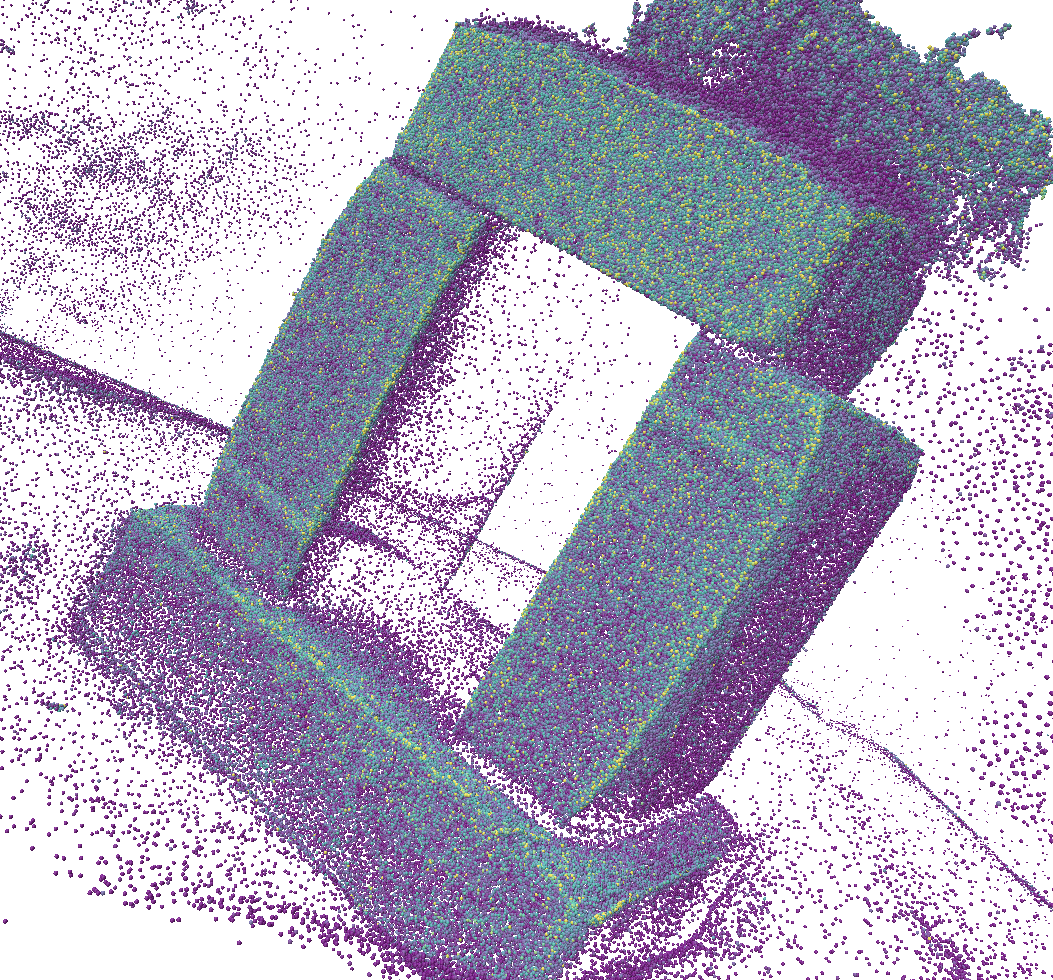
Mean Curvature
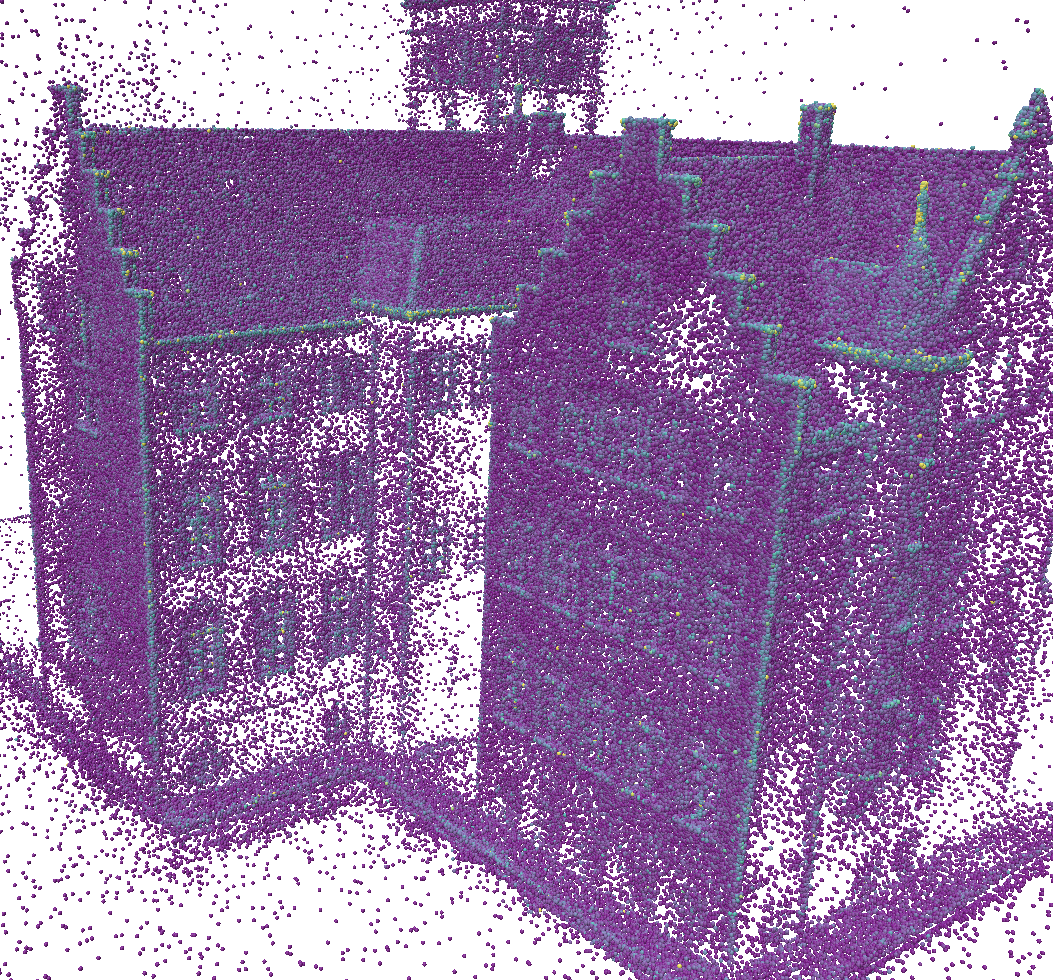
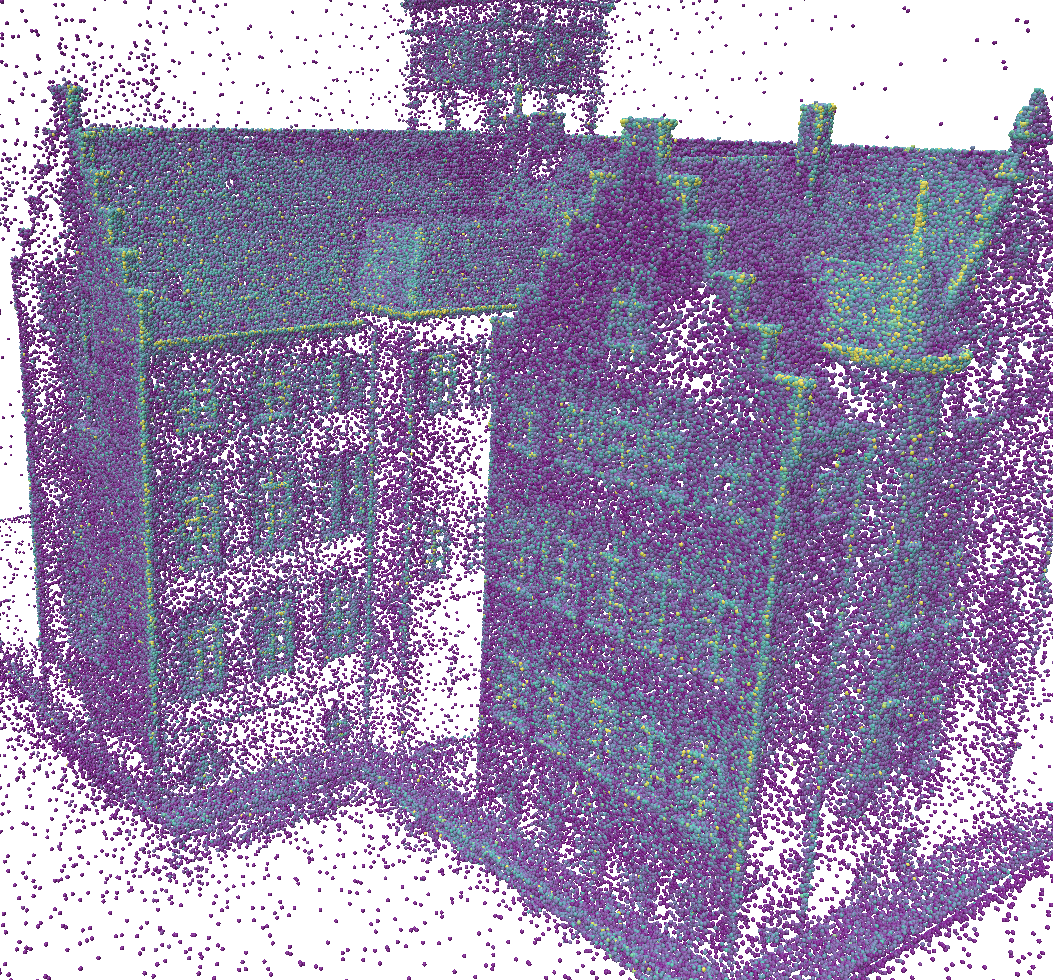
Euclidean
Mahalanobis
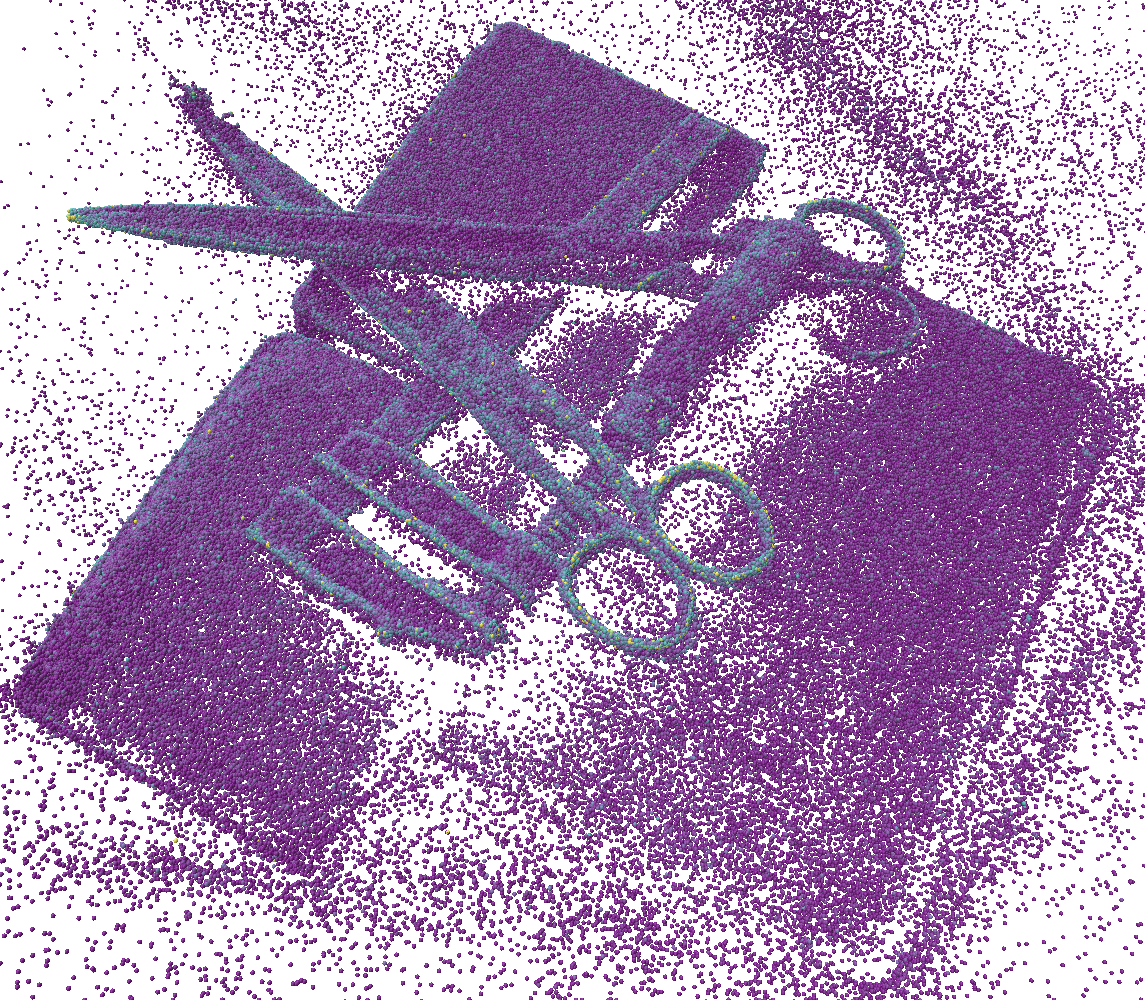
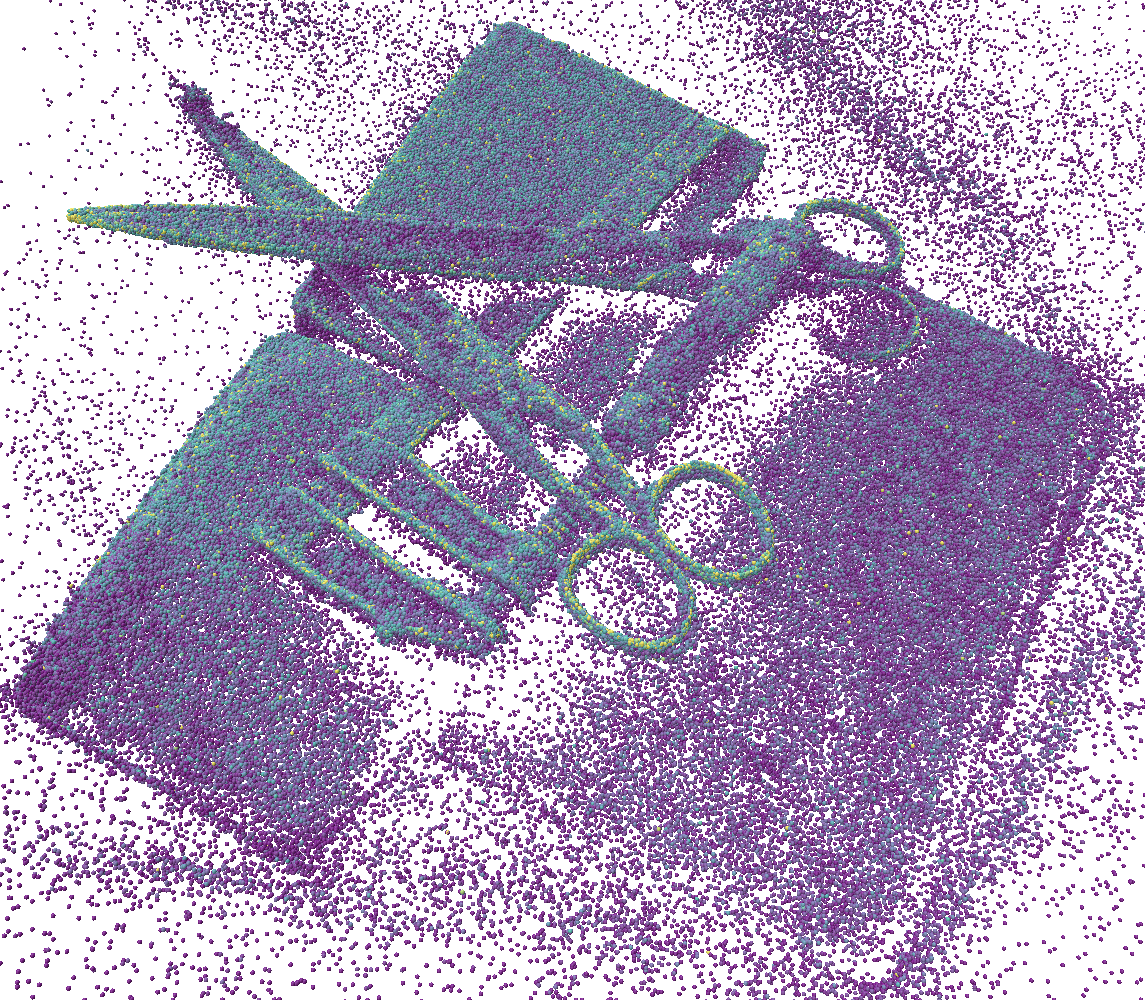
Euclidean
Mahalanobis
Euclidean
Mahalanobis
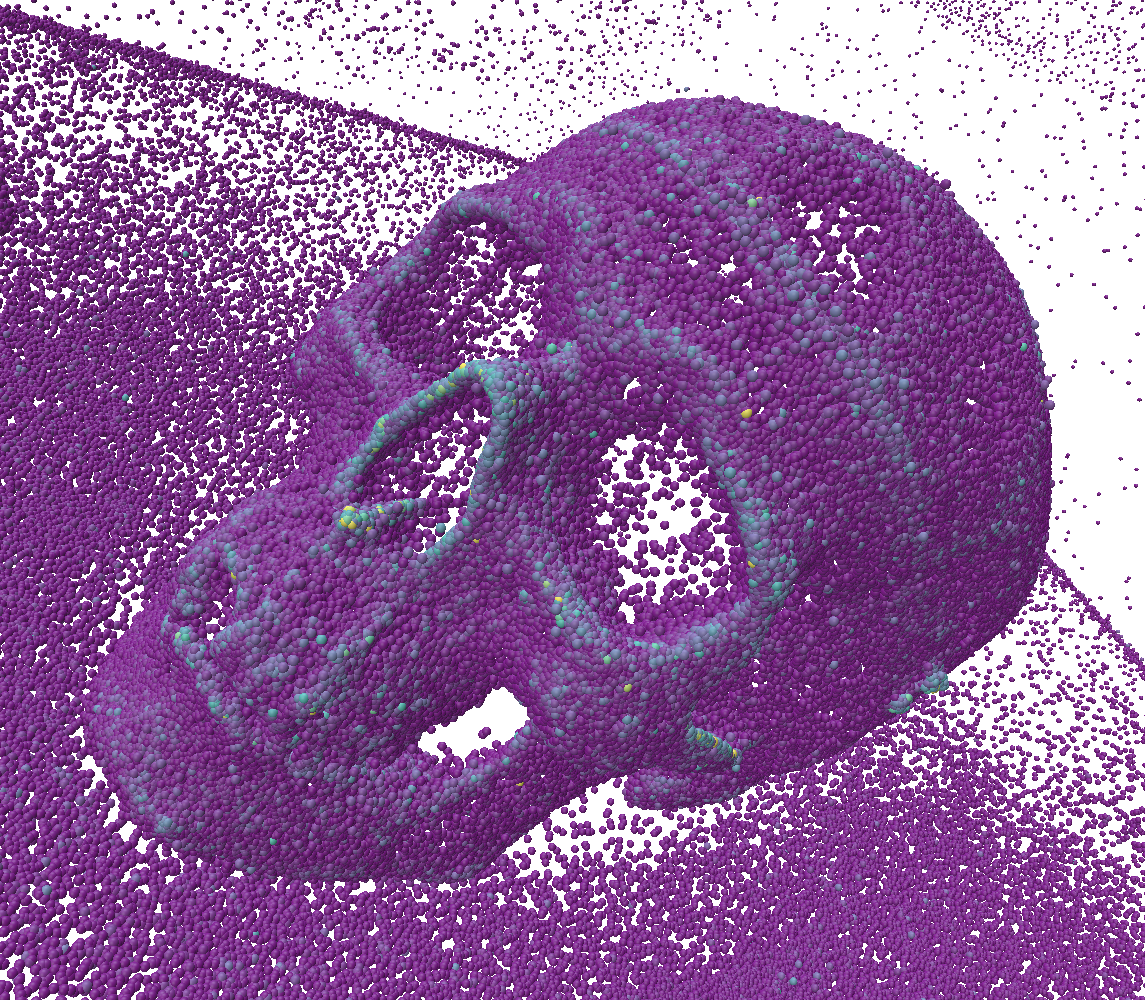
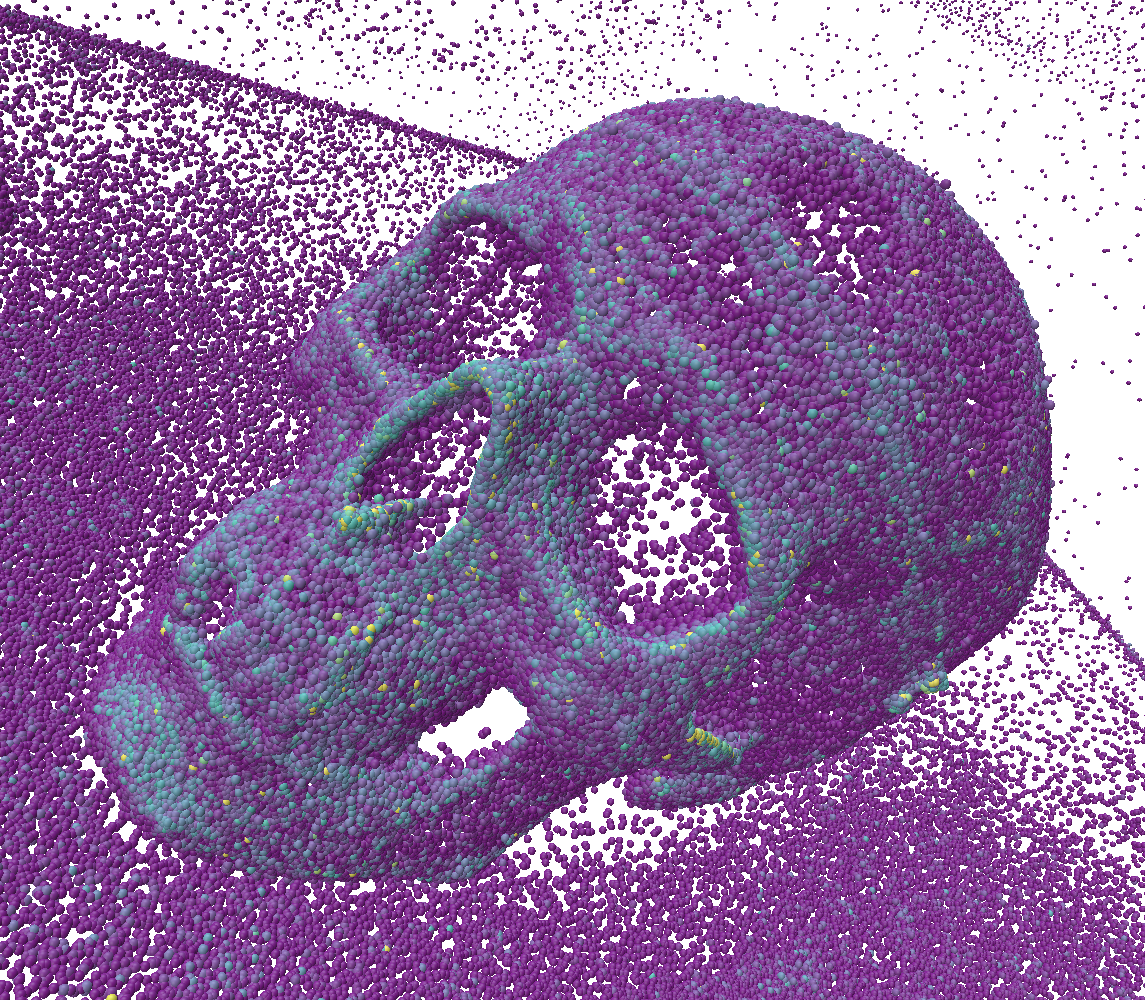
Euclidean
Mahalanobis
Euclidean
Mahalanobis
Euclidean
Mahalanobis
Euclidean
Mahalanobis
Euclidean
Mahalanobis
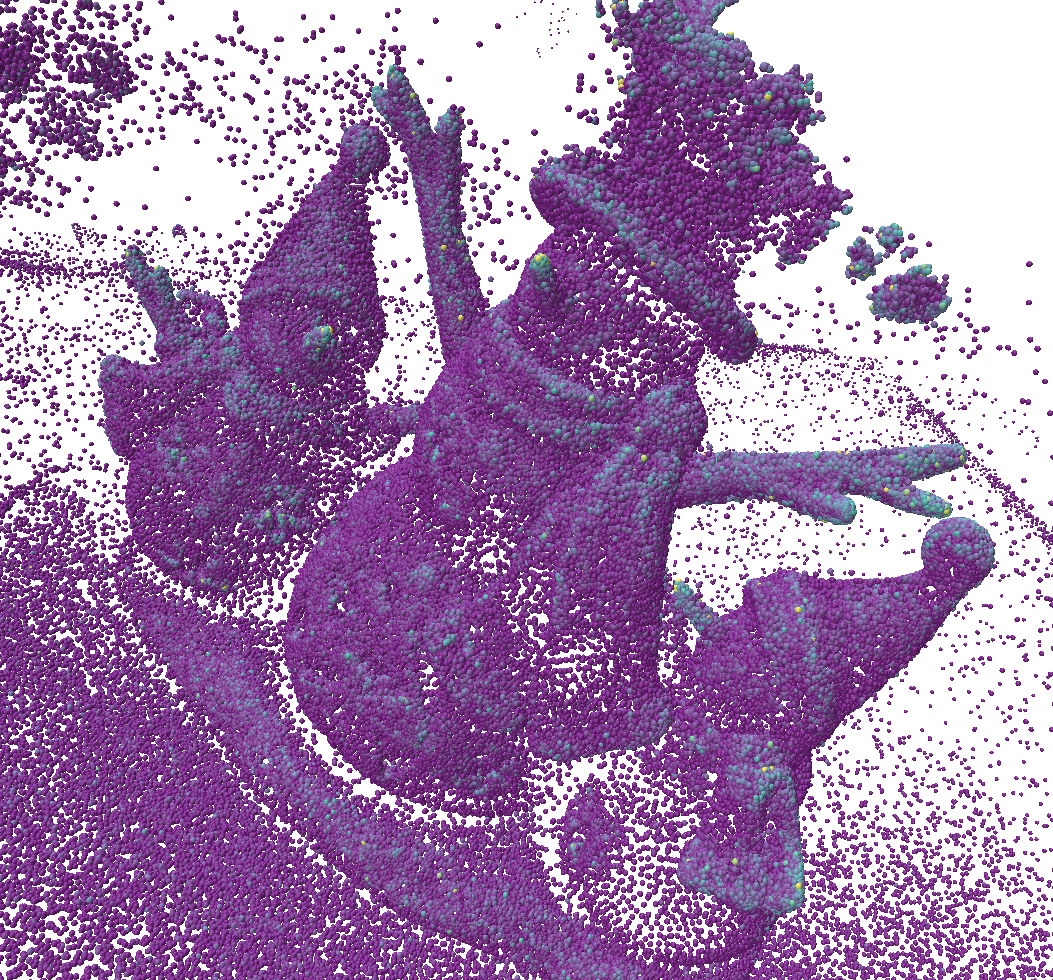
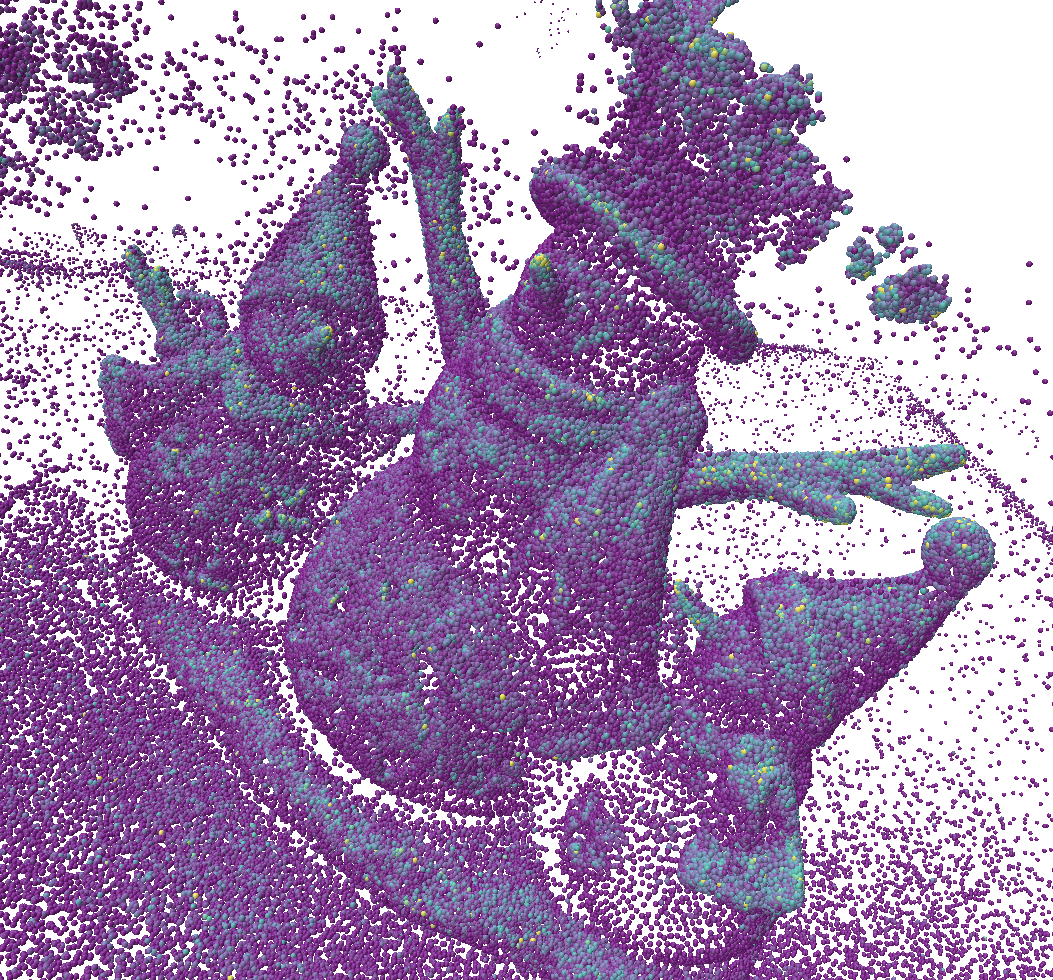
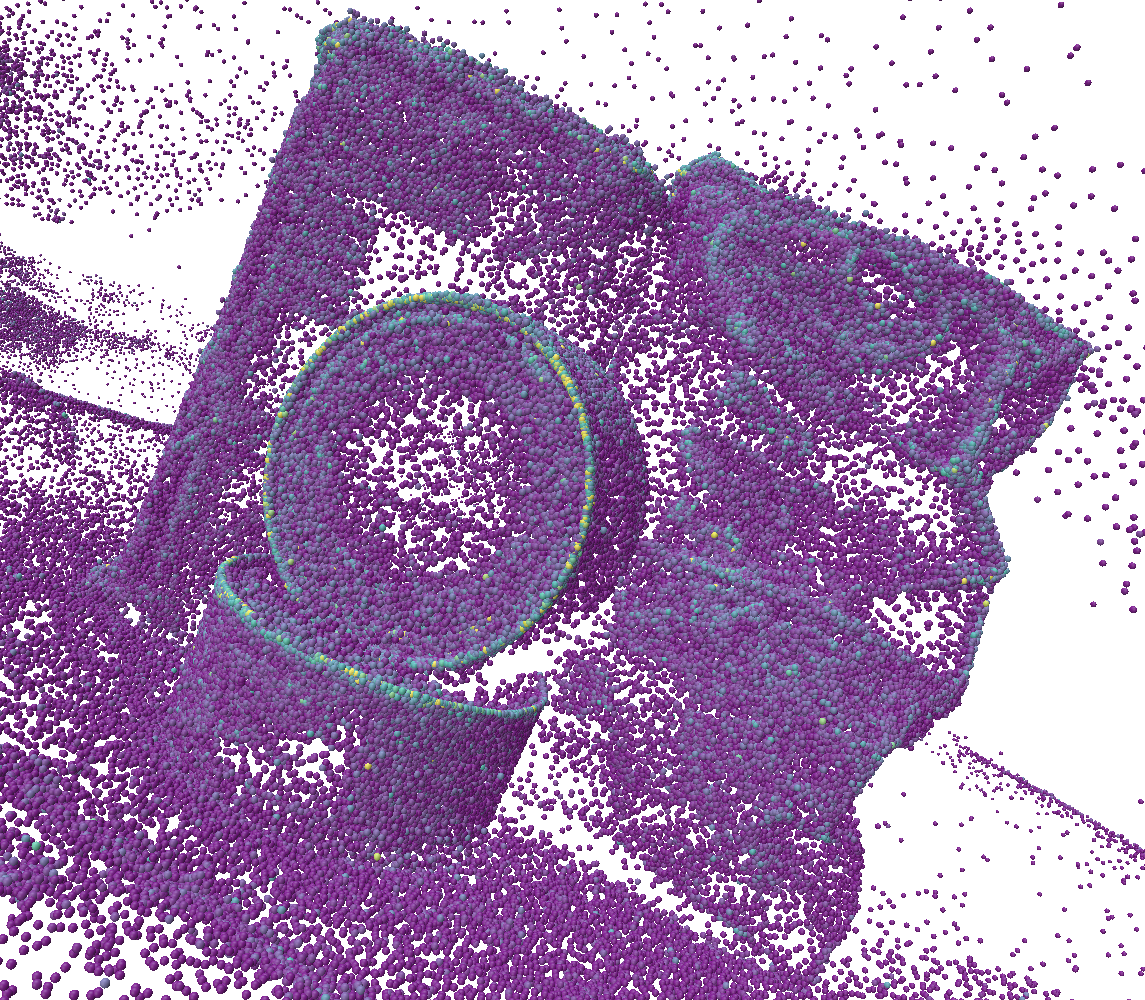
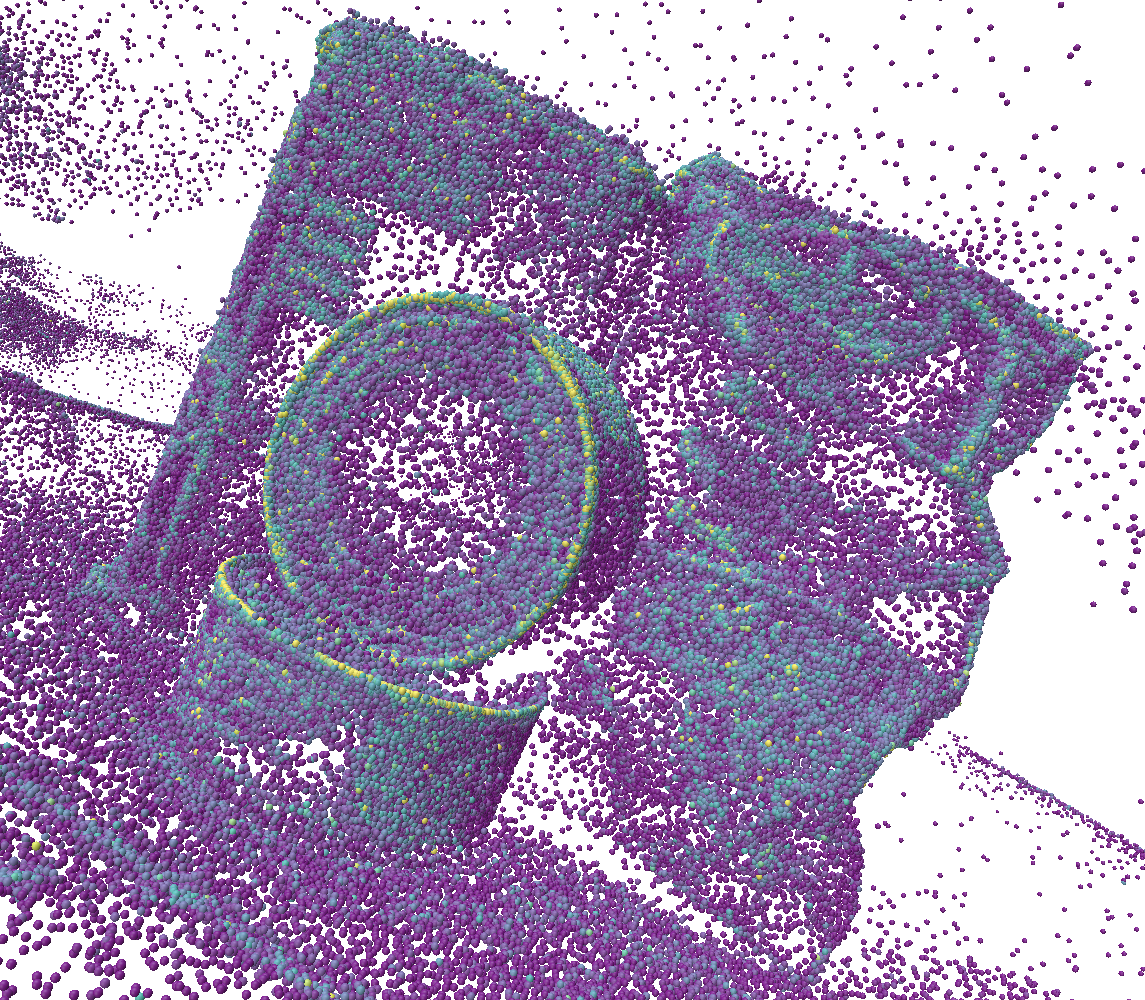
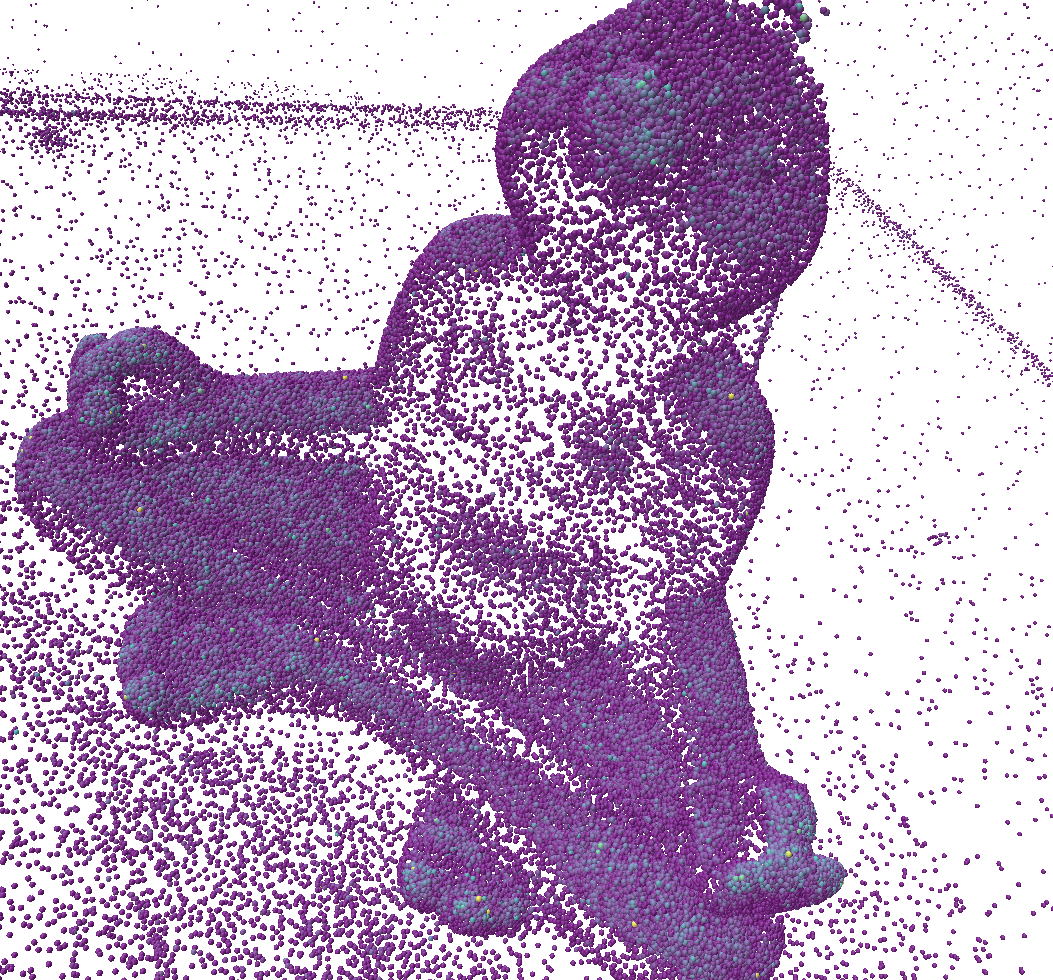
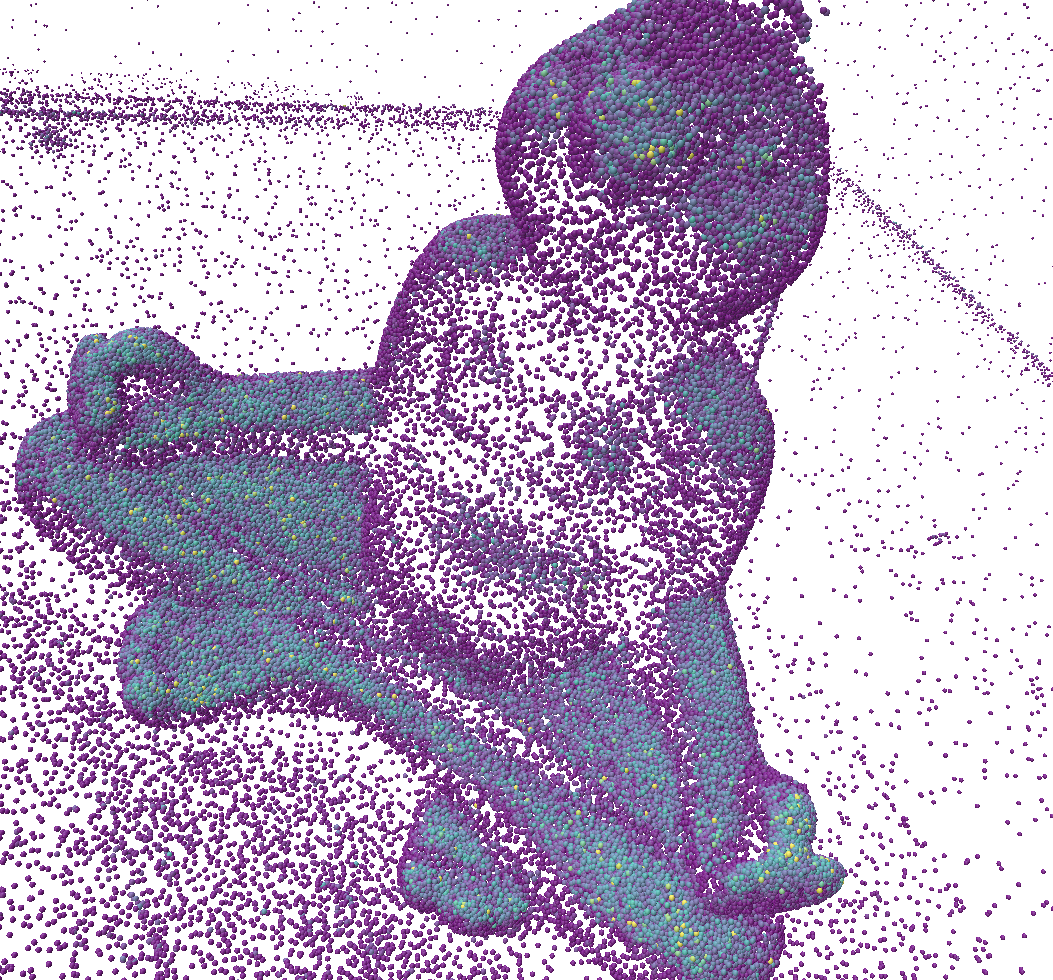
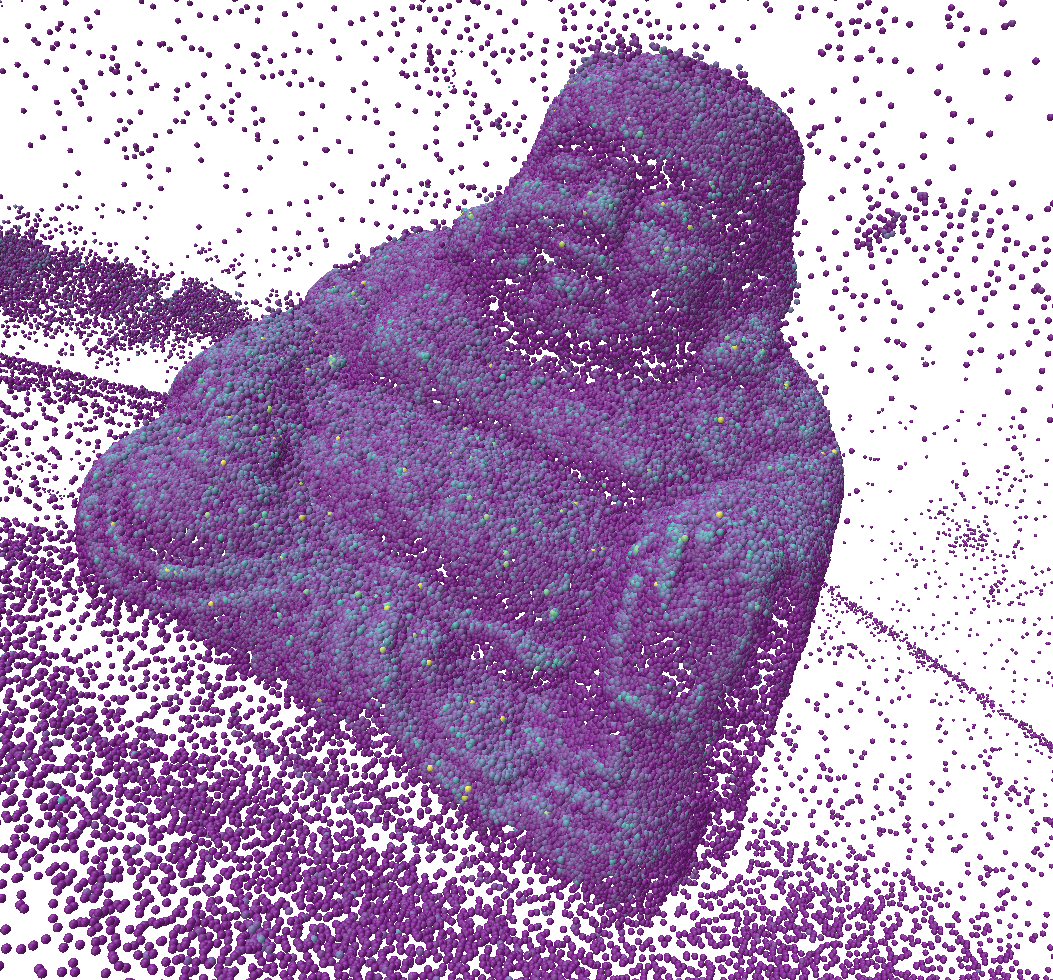
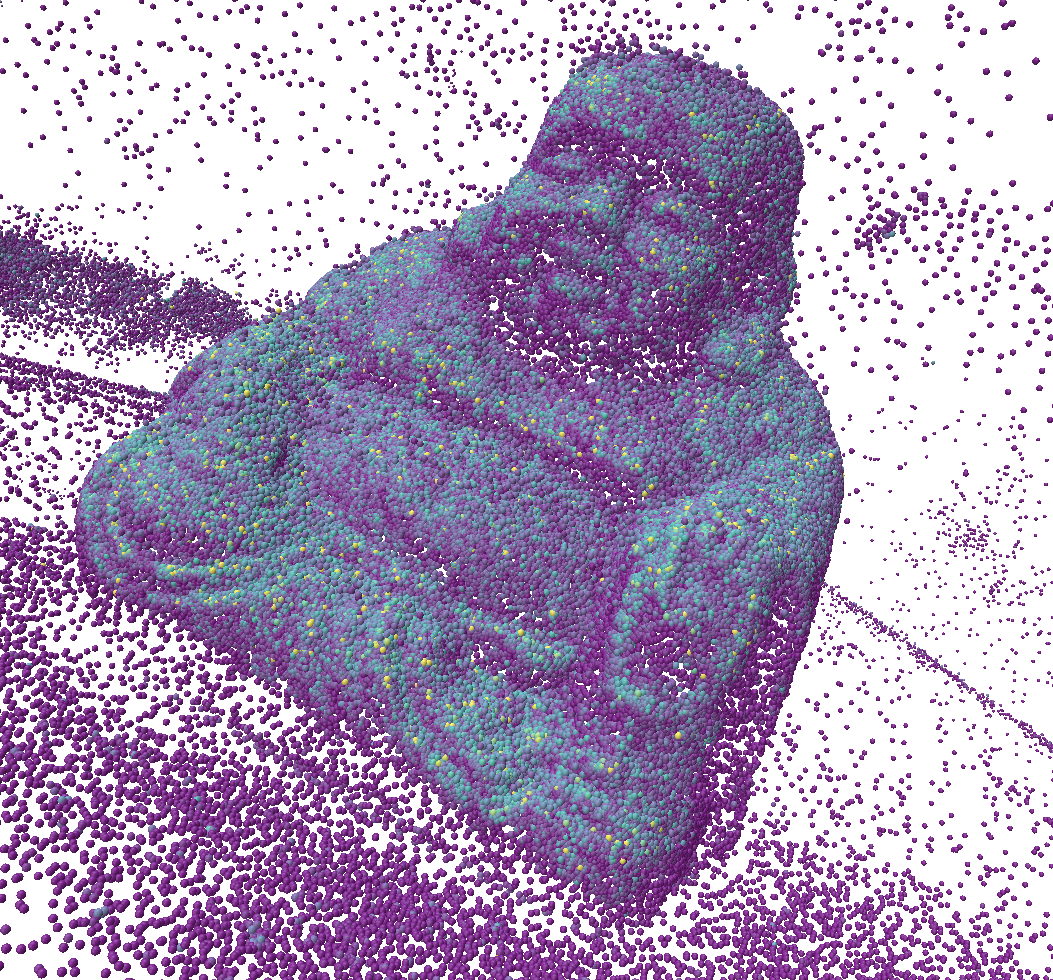
Curvature computation using the Laplace-Beltrami operator of the Gaussian center point cloud that uses Euclidean neighborhood, and our proposed method that uses Mahalanobis neighborhood. Purple indicates low curvature and turquoise to yellow higher curvature. Our method does not overestimate curvature in areas with many outliers as the point cloud Laplacian or the pure Euclidean neighborhood does.
Pruning by Graph
PGSR with pruning
PGSR w/o pruning
Comparison of our proposed adaptive learning that uses pruning by graph when training, and PGSR. Green and Red points are centers of the Gaussians, visualized together with the ground truth mesh. Our method makes the Gaussians more aligned to the surface while PGSR has many Gaussians inside the object, whose center is away from the surface, even though PGSR has already applied some pruning approaches.
More Results
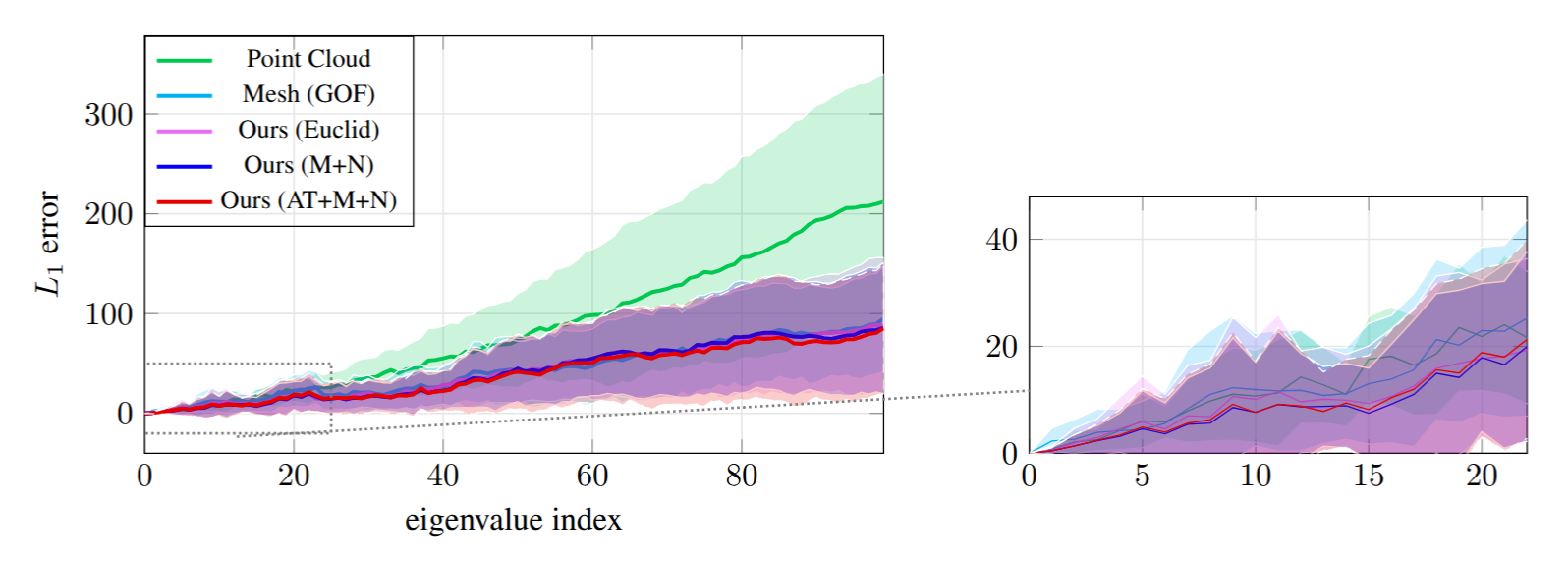
Statistical analysis over all the objects on the loss of eigenvalues. The index represents the order of the eigenvalue by magnitude. The line represent the average of the loss and one std is used for the confidence interval.
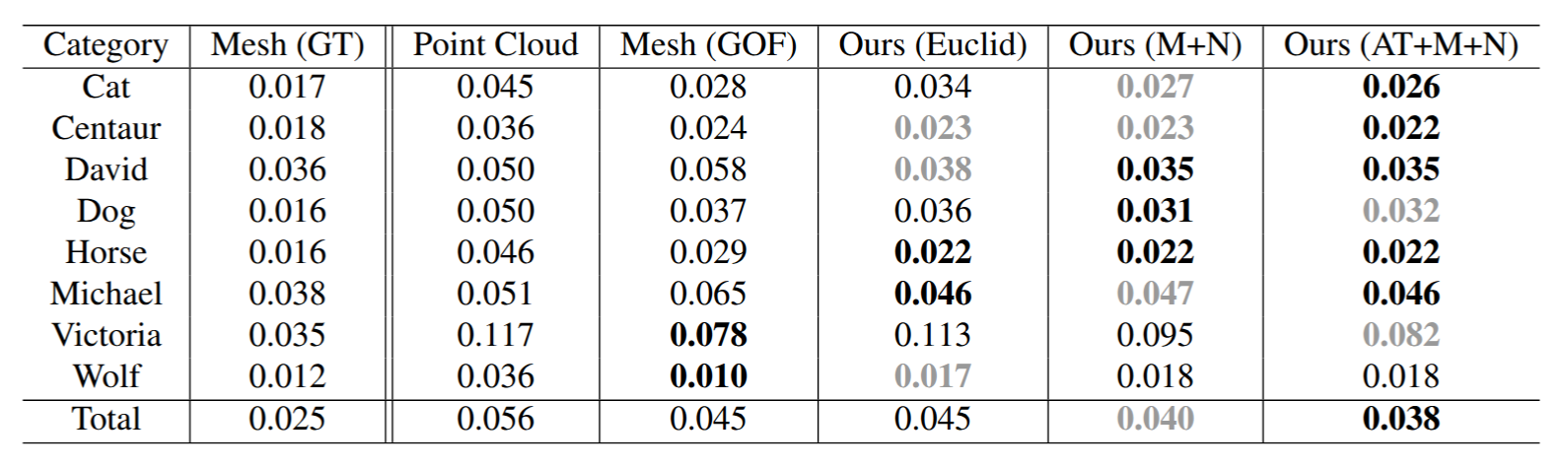
Average error in geodesic computation Egeo by Geodesics in Heat in comparison to the exact distance on the ground truth mesh. The bold represents the best score and the gray represents the second best. Note that Mesh (GT) represents the approximation error introduced by Geodesics in Heat on the ground-truth mesh as a reference and is not a competitor as the ground truth is not known in general.
Acknowledgement
This research has been funded by the Federal Ministry of Research, Technology and Space of Germany and the state of North Rhine-Westphalia as part of the Lamarr Institute for Machine Learning and Artificial Intelligence.
BibTeX
@article{zhou2025laplace,
      title={Laplace-Beltrami Operator for Gaussian Splatting},
      author={Zhou, Hongyu and L{\"a}hner, Zorah},
      journal={arXiv preprint arXiv:2502.17531},
      year={2025}
}